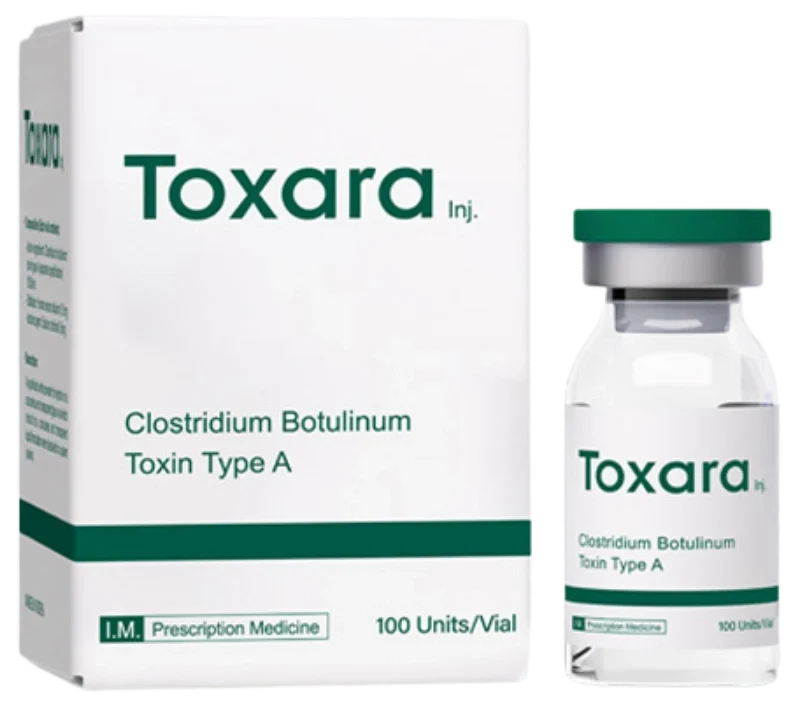
When you open a vial of Toxara, what you see is a white lyophilized powder. The journey from liquid to this powder is the most critical part of the botulinum toxin production process—specifically, the freeze-drying technology.

The Production Process Overview
The botulinum toxin production process begins with the active ingredient: Clostridium Botulinum Toxin Type A. After fermentation and a series of purification steps, the toxin is in a liquid form. But liquid biologics are inherently unstable. Without intervention, the protein complex degrades quickly when exposed to temperature fluctuations or humidity.
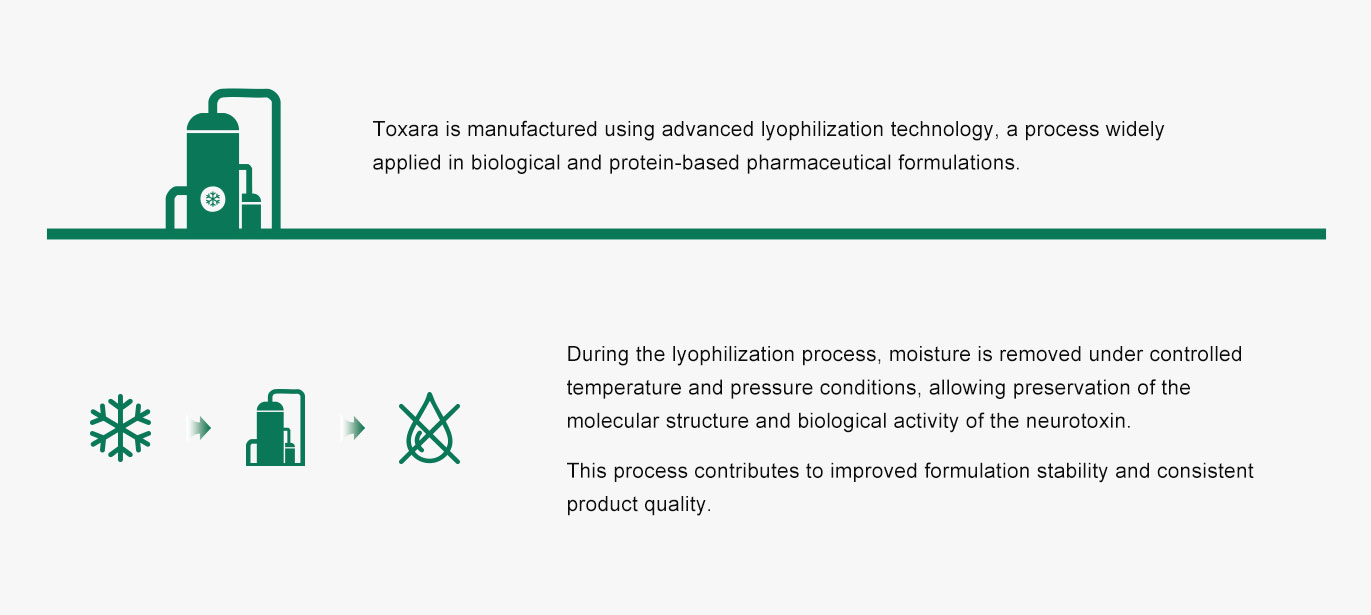
This is where lyophilization—freeze-drying—comes in. The liquid formulation is first frozen. Then, under vacuum conditions, the ice converts directly into vapor, leaving behind a dry, stable powder. This powder maintains the toxin’s structure and activity over time.
Why Lyophilization Matters for Botulinum Toxin
The botulinum toxin molecule is a 900kDa protein complex. This complex is fragile. During freeze-drying, every parameter matters: the freezing rate, the temperature curve, the drying duration. Any deviation can damage the protein structure.
A damaged protein may still show some activity, but its behavior becomes less predictable. Onset time may vary. Duration may shorten. Diffusion patterns may change. The goal of a well-designed botulinum toxin production process is to prevent this from happening.
Key Focus Areas in the Lyophilization Process
Toxara’s freeze-drying process focuses on four areas:
1. Protein Structure Preservation
The process maintains the native conformation of the toxin proteins. When the structure remains intact, functional performance stays consistent.
2. Biological Activity Retention
Activity is the core value of any botulinum toxin product. Throughout the freeze-drying process, bioactive stability is preserved to support predictable clinical performance.
3. Controlled Moisture Reduction
Residual water content is precisely removed. Too much moisture leads to degradation during storage. However, over-drying can also fragment the protein. The right balance enhances purity and minimizes degradation risk.
4. Formulation Stability
The final lyophilized powder is more stable than its liquid counterpart. This improved stability applies to storage, transport, and reconstitution.
What This Means for Clinicians
The technical choices in the botulinum toxin production process translate directly into clinical outcomes:
- Reliable Potency: Consistent processing leads to reproducible clinical outcomes, with reduced variability between batches.
- Predictable Duration: When the protein complex remains intact and biological activity is retained, the treatment effect becomes more predictable.
- Lower Immunogenicity Risk: Advanced purification removes unnecessary proteins before freeze-drying. This reduces the risk of neutralizing antibody formation—an important consideration for patients who need repeat treatments.
Quality at Every Step
The entire botulinum toxin production process is carried out under sterile, controlled conditions. From raw materials to final filling, quality assurance applies at every stage. Each batch is traceable and tested before release to meet international pharmaceutical standards. This ensures that the technical advantages described above are delivered consistently, vial after vial.
Summary
The botulinum toxin production process for Toxara is built around a central challenge: taking an unstable liquid protein and turning it into a stable solid without damaging its structure. Lyophilization technology makes this possible, but only when the freezing, drying, and moisture control are executed with precision. The result is a product that delivers consistent potency, predictable duration, and a favorable safety profile—from the first vial to the last.
Interested in learning more about Toxara or requesting samples? Contact us today for detailed product information and technical support.