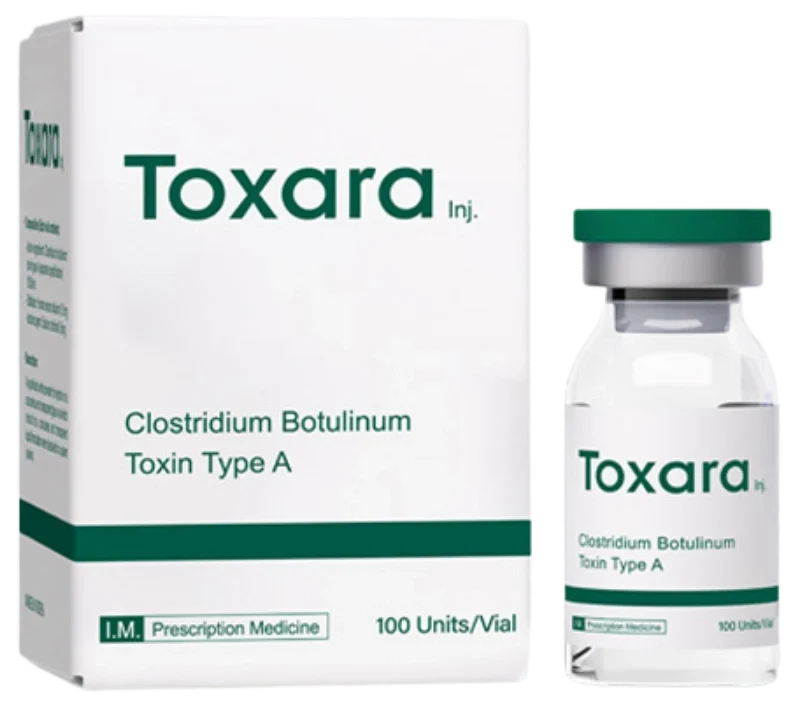
Understanding the mechanism of action of botulinum toxin is essential for aesthetic professionals who require predictable, consistent, and safe treatment outcomes. Toxara Botulinum Toxin is developed to provide controlled neuromuscular modulation, supporting a wide range of aesthetic applications with stable and reliable performance.

This article explains how botulinum toxin works at a biological level and how this mechanism translates into aesthetic and therapeutic outcomes in clinical practice.
What Is the Mechanism of Action of Botulinum Toxin?
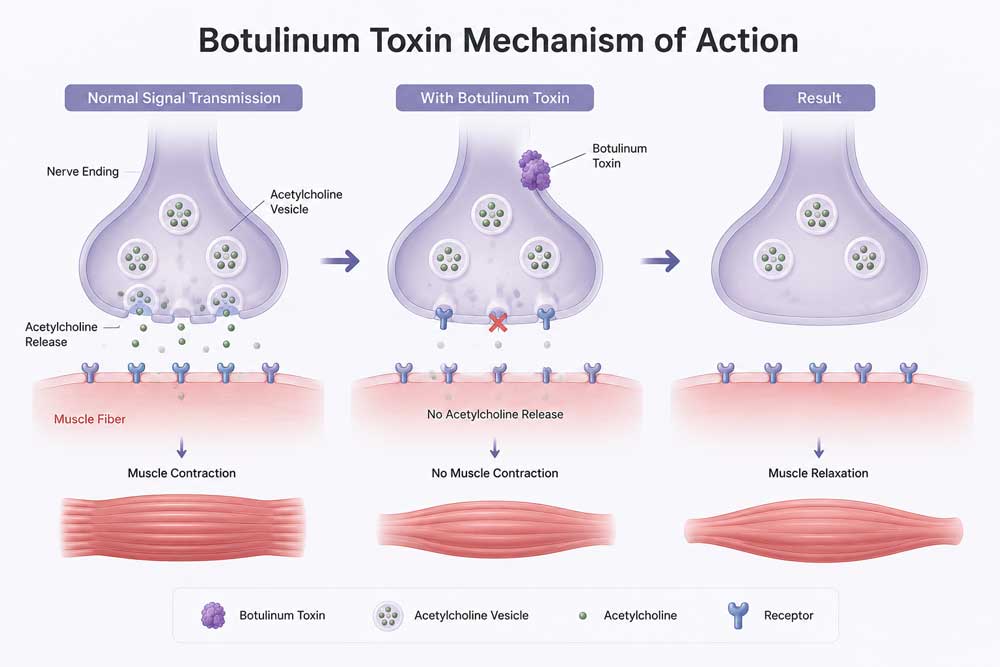
Botulinum toxin acts at the neuromuscular junction, where nerve cells communicate with muscle fibers to trigger contraction.
Under normal physiological conditions, motor neurons release a neurotransmitter called acetylcholine. This chemical signal is responsible for activating muscle contraction.
Botulinum toxin temporarily interrupts this communication process, leading to a controlled reduction in muscle activity.
Step-by-Step Mechanism of Action
The mechanism of botulinum toxin can be understood in several key biological steps:
Step 1: Binding to Nerve Terminals
Botulinum toxin selectively binds to specific receptors located on the presynaptic nerve terminal.
Step 2: Internalization into the Nerve Cell
After binding, the toxin is internalized into the nerve ending through receptor-mediated endocytosis.
Step 3: SNARE Protein Inhibition
Inside the neuron, the active component of botulinum toxin targets SNARE proteins, which are essential for neurotransmitter vesicle fusion.
By cleaving these proteins, the toxin prevents vesicles containing acetylcholine from fusing with the nerve membrane.
Step 4: Blockade of Acetylcholine Release
As a result, acetylcholine cannot be released into the neuromuscular junction, effectively blocking the signal required for muscle contraction.
Final Result: Controlled Muscle Relaxation
The targeted muscle enters a temporary and reversible state of relaxation.
How Toxara Works in Aesthetic Treatments
In clinical aesthetic applications, Toxara Botulinum Toxin acts locally at the injection site to reduce excessive muscle activity responsible for dynamic facial lines.
By modulating neuromuscular signaling in targeted areas, it helps achieve a more relaxed and balanced facial appearance while maintaining natural expression when used appropriately by trained professionals.
Common Aesthetic and Therapeutic Outcomes
The biological mechanism of botulinum toxin translates into several clinical outcomes:
- Reduction of dynamic facial wrinkles, including forehead lines, glabellar lines, and crow’s feet
- Relaxation of overactive facial muscles, resulting in a smoother and more balanced facial expression
- Temporary improvement in focal hyperhidrosis, including axillary, palmar, and frontal sweating
These effects are temporary and depend on dosage, injection technique, and individual patient response.
Precision and Stability in Toxara Formulation
The performance of botulinum toxin is closely linked to the stability of its protein structure and formulation environment.
Toxara is engineered with a formulation system designed to preserve the structural integrity and biological activity of the neurotoxin from manufacturing through clinical application.
This design supports:
- Stable protein structure during storage and handling
- Consistent biological activity after reconstitution
- Predictable diffusion behavior in targeted tissues
- Reduced variability in clinical outcomes
- Reliable performance across repeated treatment sessions
By maintaining controlled formulation stability, Toxara helps ensure predictable neuromuscular modulation in aesthetic practice.
This stability is closely related to manufacturing processes such as freeze-drying, which play a key role in final product quality. Learn more in The Botulinum Toxin Production Process: How Freeze-Drying Defines Product Quality
Why the Mechanism of Action Matters for Clinics and Distributors
A clear understanding of how botulinum toxin works is essential for safe and effective clinical application.
For medical professionals and distributors, this mechanism provides a scientific basis for:
- Predictable treatment outcomes
- Improved patient satisfaction
- Better dosing and treatment planning
- Reduced variability in clinical practice
- Increased confidence in product performance
Toxara is developed to align with these clinical requirements, supporting professionals who prioritize consistency and reliability in aesthetic injectable treatments.
Final Thoughts
The mechanism of action behind botulinum toxin is a fundamental biological process that directly determines its clinical effects in aesthetic medicine.
Toxara Botulinum Toxin is designed to deliver controlled neuromuscular modulation through a well-defined neurophysiological pathway, supporting aesthetic professionals in achieving consistent, safe, and natural-looking results.
For product specifications, wholesale information, or distribution opportunities, please contact our team to learn more about Toxara solutions.