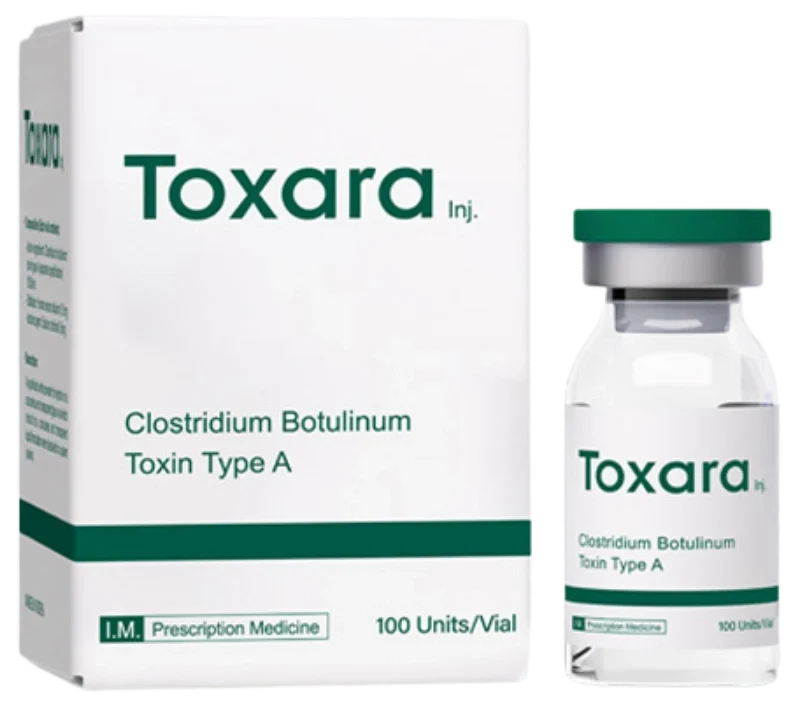
Nabota is a popular botulinum toxin type A used by aesthetic and medical professionals worldwide. Whether you’re treating glabellar lines, forehead wrinkles, or therapeutic indications like post-stroke spasticity, proper reconstitution is critical to ensure safety, accuracy, and efficacy.
In this blog, we’ll walk you through how to mix Nabota 100U botulinum toxin with 0.9% saline solution, explain why dilution matters, and provide a helpful Nabota dilution chart to guide your practice.
What Is Nabota 100U?
Nabota 100U is a botulinum toxin type A injectable manufactured by Daewoong Pharmaceutical in South Korea. It’s FDA-approved and known for its high purity and low immunogenicity.
Nabota has been manufactured using a patented manufacturing process to insure impurities have been removed as much as possible, resulting in a highly purified product. It’s commonly used to reduce facial wrinkles such as glabellar lines, crow’s feet, and forehead lines, and also for certain therapeutic indications under the guidance of medical professionals.

What Is Used to Mix Nabota?
Nabota 100U is supplied as a freeze-dried white powder in a vial. Before using, it must be reconstituted (mixed) with a 0.9% sodium chloride solution (saline) to prepare it for injection.
The basic materials include:
- Nabota vial: Contains the freeze-dried white powder.
- 0.9% sodium chloride solution: A clear, sterile liquid used as the diluent.
- Sterile syringe and needle: Used during the preparation process.
- Alcohol swabs: Used to clean the vial stopper before preparation.
- Gloves and mask: Used to support an appropriate aseptic preparation environment.
How to Mix Nabota 100U?
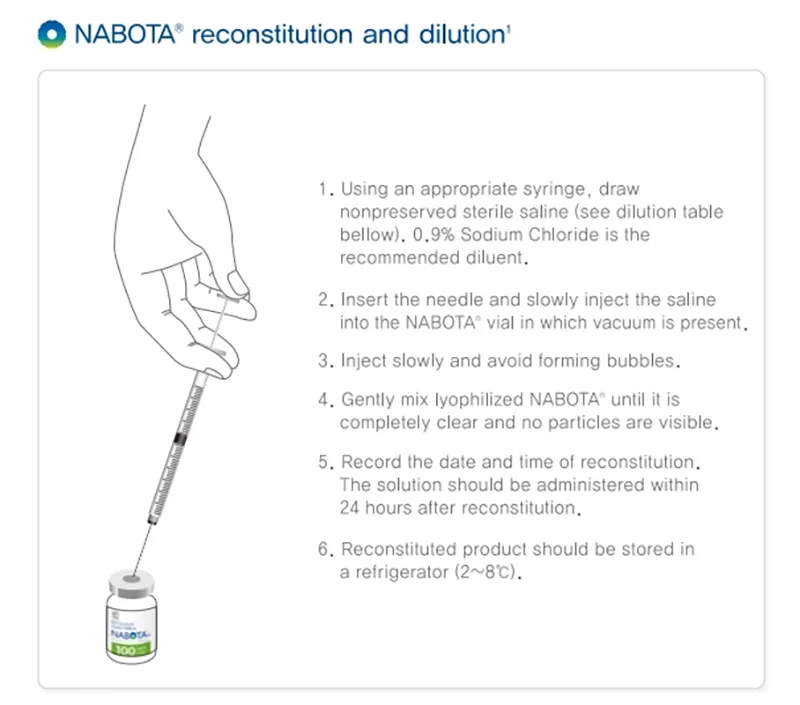
For professional use, the general reconstitution process can be understood in four stages.
1. Prepare the Saline Solution
Use a 0.9% non-preservative sterile saline solution.
Dilution Ratio: The standard dilution is 100 Units of Nabota to 2.5 mL of saline, resulting in a concentration of 4 Units per 0.1 mLh.
2. Add the Diluent Slowly
The saline is introduced into the Nabota 100U vial carefully and slowly. There is no need to shake the vial strongly. Instead, the vial can be handled gently until the powder has dissolved.
3. Check the Solution
After reconstitution, the solution should be visually checked before use. A properly reconstituted solution should be clear, colorless, and free of visible particles. If the appearance does not match the product requirements, it should not be used.
4. Record the Preparation Time
The date and time of reconstitution should be recorded according to the product instructions. The reconstituted product may be stored at 2–8°C for up to 24 hours.
Nabota Reconstitution Chart (100 Units)
Here’s a reference table showing how dilution affects unit concentration per 0.1 mL—useful for calculating doses.
|
Saline Volume (mL) |
Units per 0.1 mL | Best Use Case |
|
1.0 mL |
10 Units | Small muscles or therapeutic treatments |
|
2.0 mL |
5 Units |
Common for glabellar, forehead, crow’s feet |
| 2.5 mL | 4 Units |
Precise aesthetic applications |
| 4.0 mL | 2.5 Units |
Wider diffusion, larger treatment zones |
Tip: For most aesthetic facial treatments, 2.0–2.5 mL dilution provides an ideal balance between precision and spread.
Does More Diluent Mean More Nabota?
No. Adding more saline does not increase the total amount of Nabota in the vial. A 100-Unit vial remains a 100-Unit vial after reconstitution. What changes is the concentration.
For example, when the same 100 Units are diluted into a larger volume, there are fewer Units in each 0.1 mL. When the same 100 Units are diluted into a smaller volume, there are more Units in each 0.1 mL.
This is why it is important to distinguish between total Units and Units per volume when discussing reconstitution.
Conclusion
Proper mixing of Nabota is essential for safe and effective results. By following the correct dilution methods and handling guidelines, you ensure optimal outcomes for your patients—and minimize the risk of side effects.
Whether you’re treating a single patient or preparing multiple vials for your clinic, precision, hygiene, and product knowledge are key.
Common Questions About Mixing Nabota
1. What Does “Units” Mean in Nabota?
“Units” tells you how much botulinum toxin is in the vial. It is different from the amount of saline added.
2. Can Nabota be mixed with other liquids?
Nabota should be mixed with the recommended saline. Other liquids should not be used unless specifically advised by a qualified professional.
3. Does Nabota need to be mixed immediately before use?
Not necessarily. Once mixed, Nabota should be stored and used according to the product instructions.
4. Can the same dilution be used for different Nabota vial sizes?
Not always. The dilution depends on the number of Units in the vial and the amount of saline used
5. What If the Nabota Powder Looks Different?
Check the powder before mixing. If its appearance differs from the product instructions, do not use it until you have checked the instructions.