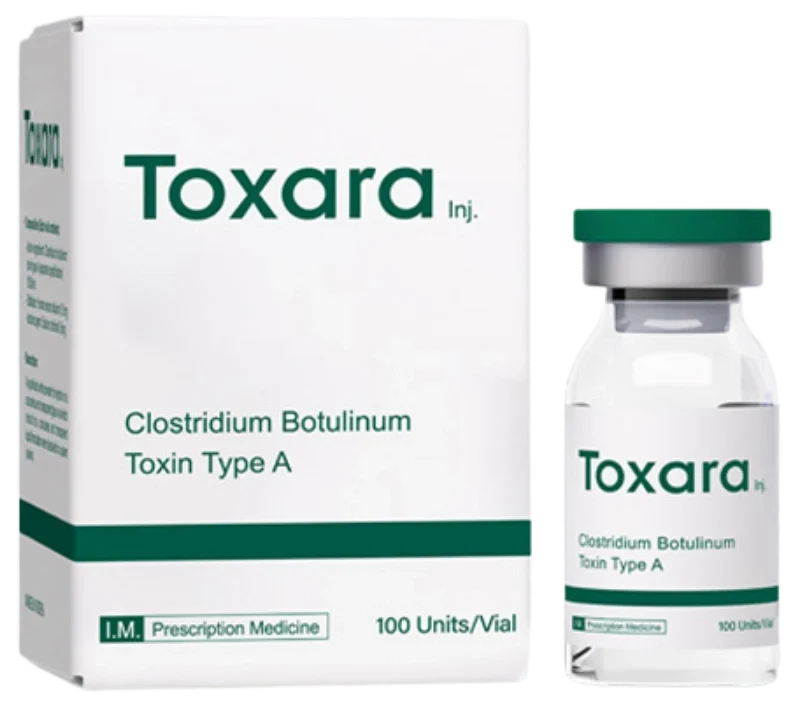
As demand for Korean botulinum toxin products continues to grow worldwide, clinics and distributors are increasingly exploring alternatives beyond the most established brands. While Nabota has built a strong reputation in the global aesthetic market, newer products such as Toxara are attracting attention for their focus on purity, precision, and product stability.
So, how does Toxara compare with Nabota, and is this new Korean botulinum toxin brand worth considering?
What Is Toxara?
Toxara is a Korean Botulinum Toxin Type A developed for professional aesthetic and therapeutic applications. It is designed to temporarily relax targeted muscles and reduce the appearance of dynamic facial wrinkles, including forehead lines, frown lines, and crow’s feet.
As a newer entrant in the Korean neurotoxin market, Toxara has gained attention among clinics and distributors looking for additional treatment options beyond established brands. The product is available in a 100-unit presentation and is intended for use by qualified medical professionals.

What Is Nabota?
Nabota is a Korean Botulinum Toxin Type A developed by Daewoong Pharmaceutical. It is widely used in aesthetic medicine for the treatment of dynamic facial wrinkles and has established a strong presence in international markets.
With years of clinical use and broad global distribution, Nabota is often considered one of the most recognized Korean botulinum toxin brands available today.

What Makes Toxara Different from Nabota?
When comparing Toxara and Nabota, it is important to understand that both are Korean Botulinum Toxin Type A products designed for professional aesthetic treatments. However, they are positioned differently in today’s market.
Rather than competing solely on brand recognition, Toxara focuses on several formulation and business factors that are becoming increasingly important to modern clinics and distributors.
1. High Purity vs. Established Market Presence
Nabota is widely recognized because of its long-standing international presence and extensive clinical use.
Toxara, on the other hand, has been developed with a strong emphasis on formulation quality and purity. Toxara features a high-purity formula designed to support consistent performance while preserving biological activity.
For clinics evaluating newer-generation toxin products, formulation quality can be just as important as brand familiarity.
2. Precision-Focused Treatment Philosophy
One of the defining characteristics of Toxara is its low-diffusion profile.
In aesthetic medicine, precision matters. Practitioners often seek products that allow targeted treatment of specific muscle groups while maintaining natural facial expressions.
Toxara is designed to support:
- Controlled product placement
- Precise muscle relaxation
- Natural-looking treatment outcomes
- Improved treatment planning in delicate facial areas
This precision-focused approach may be particularly appealing when treating forehead lines, glabellar lines, crow’s feet, and other highly expressive facial zones.
3. Long-Term Stability for Clinics and Distributors
Beyond clinical performance, product stability is an important consideration for inventory management and distribution.
Toxara offers:
- 36-month shelf life
- Storage at 2–8°C
- Low moisture content
- Preserved biological activity
These characteristics help support product consistency throughout storage and transportation, making Toxara an attractive option for clinics and wholesale partners managing long-term inventory.
4. A New Opportunity for Growing Practices
Nabota is often selected because of its established reputation and widespread recognition.
Toxara represents a different opportunity.
As an emerging Korean botulinum toxin brand, Toxara provides clinics and distributors with an additional sourcing option in an increasingly competitive market. Many buyers today are looking beyond traditional market leaders and evaluating products based on quality, supply stability, pricing flexibility, and business support.
For practices seeking to diversify their product portfolio while maintaining professional treatment standards, Toxara offers a modern alternative worth exploring.
Toxara vs Nabota at a Glance
| Feature | Toxara | Nabota |
|---|---|---|
| Type | Botulinum Toxin Type A | Botulinum Toxin Type A |
| Origin | Korea | Korea |
| Market Position | Emerging brand | Established global brand |
| Formulation Focus | High purity and precision | Strong clinical recognition |
| Diffusion Profile | Low diffusion approach | Widely adopted clinical profile |
| Shelf Life | 36 months | Manufacturer specifications |
| Storage | 2–8°C | 2–8°C |
| Ideal For | Clinics seeking alternatives and growth opportunities | Clinics preferring established brands |
Which Brand Is Right for Your Clinic?
The choice between Toxara and Nabota ultimately depends on your clinic’s priorities.
If your primary focus is working with a brand that has an extensive international presence and long-standing market recognition, Nabota may feel like the familiar choice.
However, if you are interested in exploring newer-generation Korean botulinum toxin products that emphasize formulation quality, precision, product stability, and flexible business opportunities, Toxara offers a compelling alternative.
Many clinics today are no longer relying on a single toxin brand. Instead, they are evaluating multiple options to improve purchasing flexibility, diversify supply channels, and better meet patient needs.
Final Thoughts
Nabota remains one of the most established Korean botulinum toxin brands with strong global recognition and long-term clinical use.
Toxara, in contrast, represents a newer generation of toxin products focused on purity, precision, and stable supply conditions for clinics and distributors.
Rather than replacing established brands, Toxara provides an additional option for practices looking to diversify their product selection and explore new opportunities within the Korean botulinum toxin market.