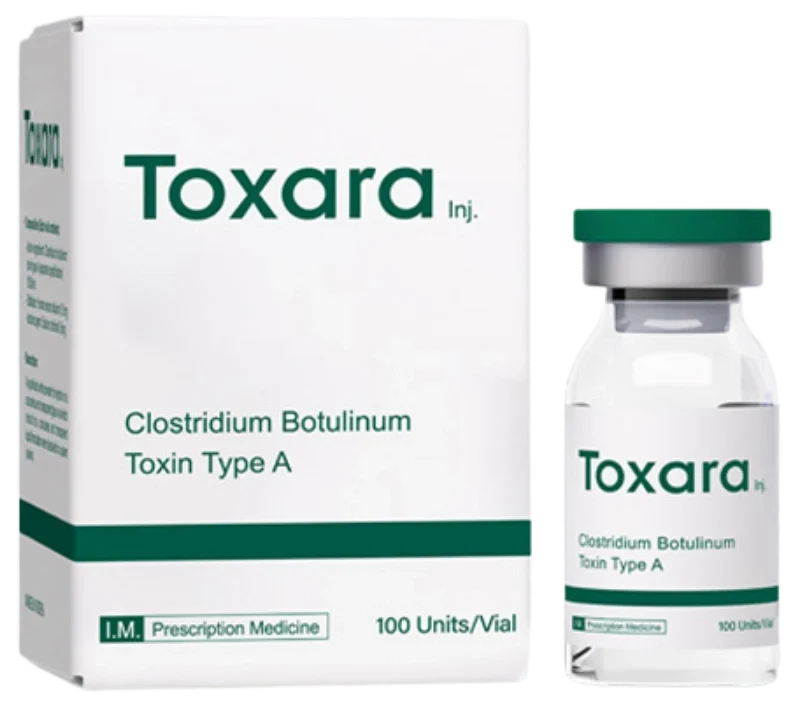
Within the sphere of botulinum toxins in clinical aesthetic practice, practitioners are increasingly seeking products that offer not just safety, but high precision and predictable diffusion. In this clinical case study, we explore the efficacy of Toxara, a high-purity botulinum toxin, through the lens of real-world patient outcomes.
Toxara: The Precision Toxin
In contemporary clinical practice, the goal has shifted from “total immobilization” to “neuromodulation.” Patients today demand a look that is refreshed and youthful, yet retains the ability to express emotion. Achieving this balance requires a toxin with a stable molecular structure and a controlled field of effect.
Toxara has been engineered to address these specific needs. Its formulation ensures high potency with minimal non-functional proteins, which reduces the risk of antibody formation—a critical consideration for the long-term management of botulinum toxins in clinical aesthetic practice.
Case Study Analysis: Multi-Zone Facial Rejuvenation
The following cases illustrate the transformative power of Toxara across the upper face, focusing on the three most requested treatment areas.
Case 1: Forehead Rhytids
The forehead is a high-stakes area. Over-treating the frontalis muscle can lead to ptosis (brow heaviness), while under-treating leaves distracting horizontal lines.
Patient Presentation: A female patient with deep horizontal forehead lines visible during active expression.
Clinical Approach: Multi-point, superficial, low-dose technique with Toxara, targeting the frontalis muscle.
The Result: (As seen in the first case image) The post-treatment results show a remarkable reduction in skin folding. The skin appears taut and luminous, yet the brow position remains natural. This demonstrates Toxara’s excellent stability, staying exactly where it is injected to prevent unwanted muscle relaxation elsewhere.

Case 2: Glabellar Lines
The glabella (the space between the eyebrows) is governed by the procerus and corrugator muscles. These are strong muscles that require a toxin with high binding affinity.
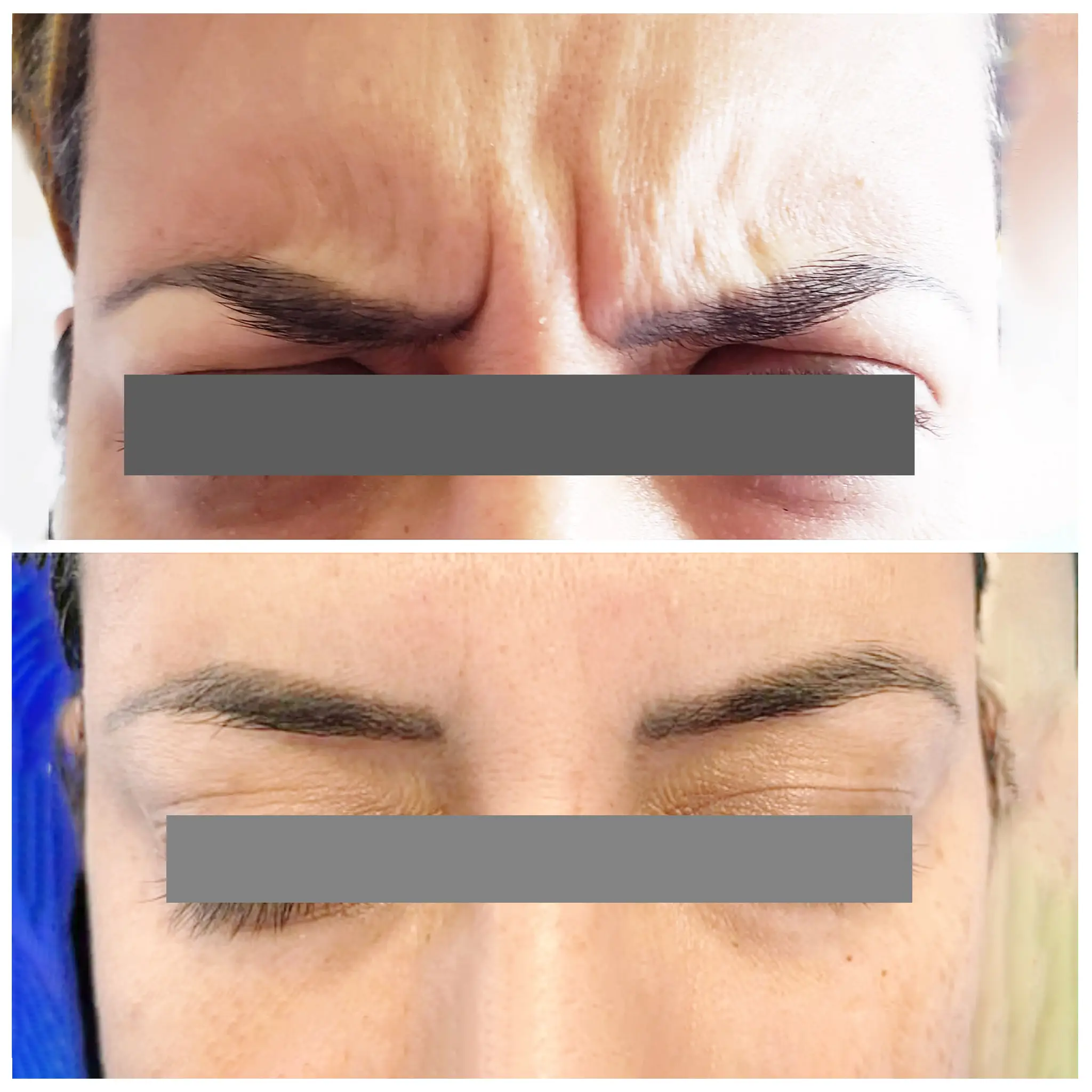
Patient Presentation: Severe vertical “11” lines during frowning, creating a tired or stressed appearance.
Clinical Approach: Precise intramuscular injections were placed into the corrugator supercilii and the procerus.
The Result: (As seen in the second case image) The transformation is profound. The “etched-in” look is neutralized. What is most notable is the skin texture improvement; the area appears smoother and the patient’s resting expression is significantly more approachable.
Case 3: Periorbital Rhytids
Crow’s feet are often the first sign of aging. Because the skin around the eyes is incredibly thin, the diffusion of the toxin must be perfectly managed to avoid affecting the zygomaticus muscles (which could distort the smile).
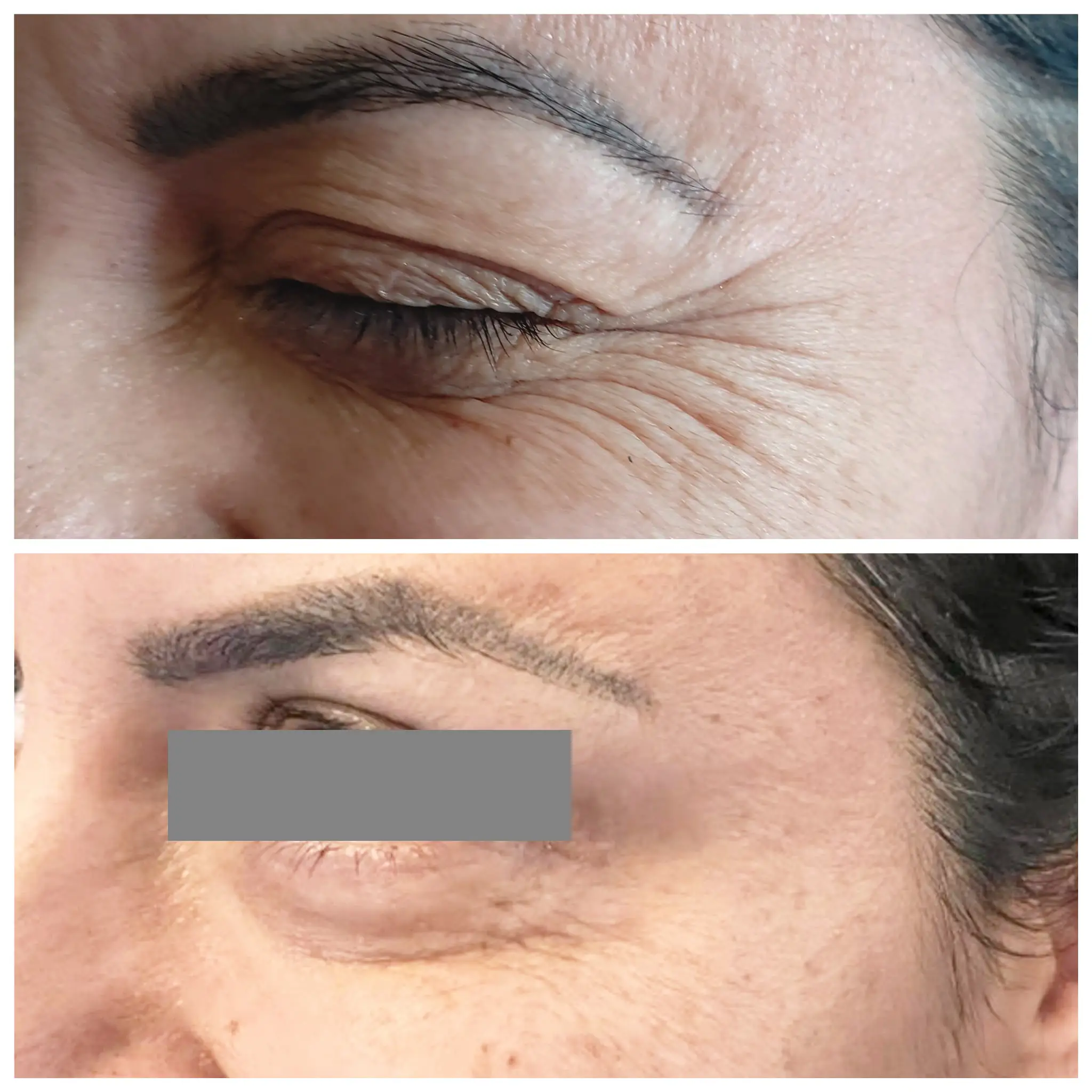
Patient Presentation: Dynamic wrinkles radiating from the outer canthus during squinting or smiling.
Clinical Approach: Micro-doses of Toxara were administered into the lateral orbicularis oculi.
The Result: (As seen in the third case image) The “crinkling” effect is minimized. The eye area appears more “open” and rejuvenated. The precision of Toxara ensured that the patient’s natural smile remained intact, avoiding the “plastic” look often associated with inferior techniques or products.
Why Toxara for Clinical Practice?
Successful outcomes in botulinum toxins in clinical aesthetic practice are the result of three factors: Anatomy, Technique, and Product Purity. For a step-by-step explanation of how injections are performed in practice, see our Practical Guide to Botulinum Toxin Injections.
1. Controlled Diffusion
One of the primary concerns for injectors is “toxin migration.” If a toxin spreads too far from the injection site, it can lead to complications like eyelid ptosis or asymmetrical smiles. Toxara’s formulation is optimized for a tight diffusion radius, allowing for “micro-droplet” techniques that are essential for delicate areas like the lower forehead and periorbital region.
2. Potency and Longevity
Clinical feedback indicates that Toxara provides a rapid onset of action—often visible within 2–4 days—with peak results at 14 days. For the clinic, this high patient satisfaction rate translates into better retention and word-of-mouth referrals.
3. Safety Profile
By utilizing advanced freeze-drying technologie, the product maintains its biological activity even during transport and storage. For the clinician, this means every unit injected performs exactly as expected.
Conclusion
As the demand for botulinum toxins in clinical aesthetic practice continues to grow, the differentiator for any brand or clinic will be the quality of the results. The case studies presented here confirm that Toxara is a premier choice for modern aesthetic clinics. Whether addressing deep structural furrows or fine superficial lines, the product provides the consistency and safety required for high-end clinical practice.
Are you ready to elevate your clinical outcomes? Contact our medical team today to learn more about Toxara and how it can be integrated into your aesthetic practice.