The growing global demand for aesthetic and therapeutic botulinum toxin treatments has brought with it an alarming parallel trend: a surge in counterfeit products reaching consumers across multiple regions.
For both healthcare providers and individual consumers, verifying botulinum toxin authenticity before any purchase or injection is no longer optional—it is a critical safety measure. This guide provides practical, actionable steps to ensure you are dealing with genuine, regulated products.
Why Botulinum Toxin Authenticity Matters
Counterfeit botulinum toxin products pose severe health risks. Unlike authentic, regulated products that undergo rigorous quality control, fake versions may contain incorrect dosages, impurities, or improperly handled active ingredients. In 2024 alone, public health officials investigated outbreaks of harmful reactions linked to counterfeit products, with symptoms ranging from blurred vision to difficulty swallowing.
Botulinum toxin authenticity is therefore a patient safety issue that demands vigilance. Reputable manufacturers, prioritize this by subjecting every batch to stringent quality control to ensure it meets international pharmaceutical standards before release.
Step 1: Choose the Right Source
The most fundamental step in ensuring botulinum toxin authenticity is choosing a legitimate supply channel.
For healthcare providers:
Botulinum toxin products should only be sourced from authorized suppliers designated by the manufacturer. Always verify that your supplier is licensed to distribute medical-grade products in your region.
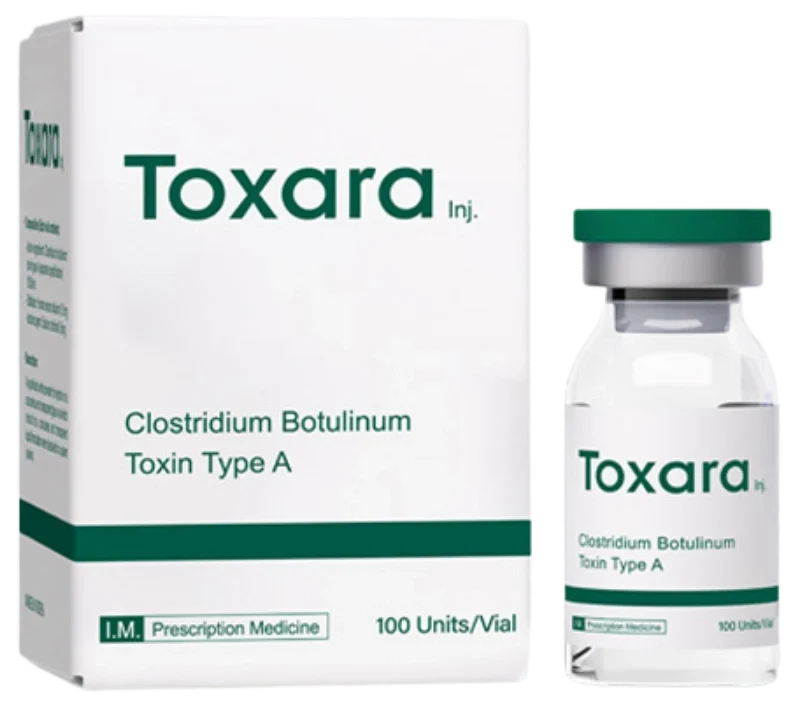
Toxara, for example, is committed to transparency and regulatory excellence, manufacturing its products in a state-of-the-art facility compliant with Global GMP standards. This ensures a clear, auditable supply chain.

For consumers:
Only receive injections at licensed medical facilities—not in private homes or unregulated venues.
Red flag: If the price seems too good to be true, it probably is. Authentic products have consistent unit pricing.
Step 2: Inspect the Packaging
One of the most reliable ways to verify botulinum toxin authenticity is through careful physical inspection of the packaging. Counterfeiters often produce convincing fakes, but specific inconsistencies can give them away.
| Feature | What to Look For | Red Flags |
|---|---|---|
| Packaging integrity | The outer carton should be sealed and intact. | Signs of tampering or previously opened packaging. |
| Typography | Professional, clear printing with correct spelling. | Typographical errors or incorrect formatting. |
| Unit dose | Legitimate products typically come in standard unit sizes (e.g., 50 or 100 units). | Non-standard vial sizes such as 150 units. |
| Lot numbers | Batch numbers should be verifiable through official channels. | Suspicious or unverifiable lot numbers. |
Step 3: Use Official Verification Tools
Many regulatory agencies and manufacturers provide verification systems to confirm botulinum toxin authenticity.
Digital verification methods:
- Some products carry a unique traceability code that can be scanned to confirm product identity and supply chain history.
- Check with your local drug regulatory authority website to see if they offer an online product registration lookup tool.
What to do during the procedure:
- Ask to see the product packaging before the injection is prepared.
- Observe the preparation process—ensure the vial is opened in your presence.
- Keep a record: take a photo of the packaging and lot number.
Step 4: Know the Authorized Products in Your Market
Regulatory agencies approve specific botulinum toxin products for use in each jurisdiction. Verifying botulinum toxin authenticity means confirming that the product you are being offered is among those approved for your country.
Always check with your local drug regulatory authority to confirm which products are legally available in your region.
Step 5: Report Suspected Counterfeits
If you encounter a product that you suspect is counterfeit, report it immediately. Timely reporting helps regulatory agencies track and shut down counterfeit supply chains, protecting other consumers.
Where to report:
- National drug regulatory authorities
- Adverse event reporting systems
- Consumer protection hotlines
What to report:
- Product packaging photos and lot numbers
- Where and from whom the product was obtained
- Any adverse reactions experienced
FAQ
Q1: How can I verify botulinum toxin authenticity before purchasing?
A: Start by choosing a licensed medical provider and authorized supplier. Then inspect the packaging for proper language, correct unit dosing, and intact seals. Use official verification tools where available.
Q2: What are the signs of counterfeit botulinum toxin?
A: Common signs include all-foreign-language packaging, non-standard unit doses (e.g., 150 units), typographical errors, and prices significantly below market average.
Q3: Is it safe to buy botulinum toxin online?
A: It depends on the source. For licensed professionals, purchasing through verified authorized distributors is standard and safe.
Q4: What should I do if I suspect I received a counterfeit product?
A: Report it to your national drug regulatory authority and seek immediate medical attention if you experience any symptoms such as blurred vision, difficulty swallowing, or muscle weakness.
Conclusion
Botulinum toxin authenticity is not just a regulatory compliance issue—it is a matter of patient safety. As counterfeit products become increasingly sophisticated, vigilance at every step—from choosing a provider to inspecting packaging and using verification tools—is essential.
Choosing a reputable manufacturer committed to quality and transparency is your first line of defense. Toxara is dedicated to providing authentic, high-purity botulinum toxin type A, manufactured in a GMP-compliant facility with rigorous quality control. When you choose Toxara, you are choosing a product backed by science and a commitment to safety.
Ready to learn more about Toxara? [Contact our team today]