Toxara Botulinum Toxin Type A is a neuromodulator used in aesthetic medicine for the temporary reduction of dynamic facial wrinkles caused by repetitive muscle movement. It is commonly applied in routine clinical practice for facial indications such as forehead lines, glabellar lines, and crow’s feet. The 100-unit formulation is widely used in day-to-day aesthetic treatments due to its practical dosing range and suitability for multiple facial areas in a single session.
This article presents a structured clinical observation based on typical treatment outcomes, practitioner experience, and patient feedback following the use of Toxara 100 units in facial aesthetic procedures.
Patient Profile and Treatment Background
In this clinical observation, Toxara 100 units was applied in a standard aesthetic treatment setting involving upper facial dynamic wrinkles.
The treatment was selected for patients presenting with:
- Moderate forehead lines visible during expression
- Active glabellar muscle contraction (frown lines)
- Periorbital fine lines (crow’s feet)
These concerns are typically associated with repeated facial muscle activity rather than static skin aging.
No pre-existing neuromuscular disorders or contraindications were reported in the observed cases.
Treatment Areas and Injection Focus
Toxara 100 units was distributed across commonly treated facial zones, including:
- Forehead region: Targeting the frontalis muscle responsible for horizontal expression lines.
- Glabellar region: Targeting the corrugator and procerus muscles responsible for frowning activity.
- Periorbital region: Targeting the orbicularis oculi muscle to reduce lateral eye wrinkles.
These areas were selected based on standard aesthetic mapping principles used in neuromodulator treatments.
Clinical Observation Timeline
The treatment response was monitored over a standard post-injection period. Notably, real-world patient feedback captured during routine clinical follow-up provided valuable insights into the early onset profile.
Day 0 – Injection Day
The procedure was completed using standard injection techniques. No immediate complications or adverse events were observed.
Day 1–2 – Early Onset (Real-World Patient Report)
In routine clinical practice, one patient voluntarily reported the following via follow-up communication:
“I love it so far… it started working in one day on my face.” — Patient feedback, Day 1 post-injection

While objective clinical changes remained minimal on Day 1 examination, this patient’s experience highlights the potential for early subjective response, which may positively influence patient satisfaction and treatment perception.
Day 3–4
Early signs of reduced muscle contraction began to appear on clinical examination. Patients reported a slight decrease in expression intensity, particularly in the glabellar region.
Day 5–7
Noticeable softening of dynamic wrinkles was observed during facial movement. Forehead and crow’s feet areas showed visible improvement in line depth during active expression.
Day 10–14
Peak clinical effect was typically reached. Muscle relaxation stabilized, and overall facial expression appeared smoother and less tense.
This statement, though using the colloquial term “instant,” is best understood in context as a reflection of the patient’s high satisfaction with the rapid onset and overall efficacy of the product.

In clinical terms, it reinforces that Toxara 100 units is perceived by patients as delivering fast-acting, noticeable results.
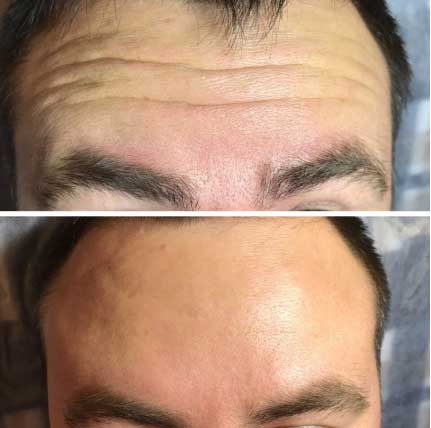
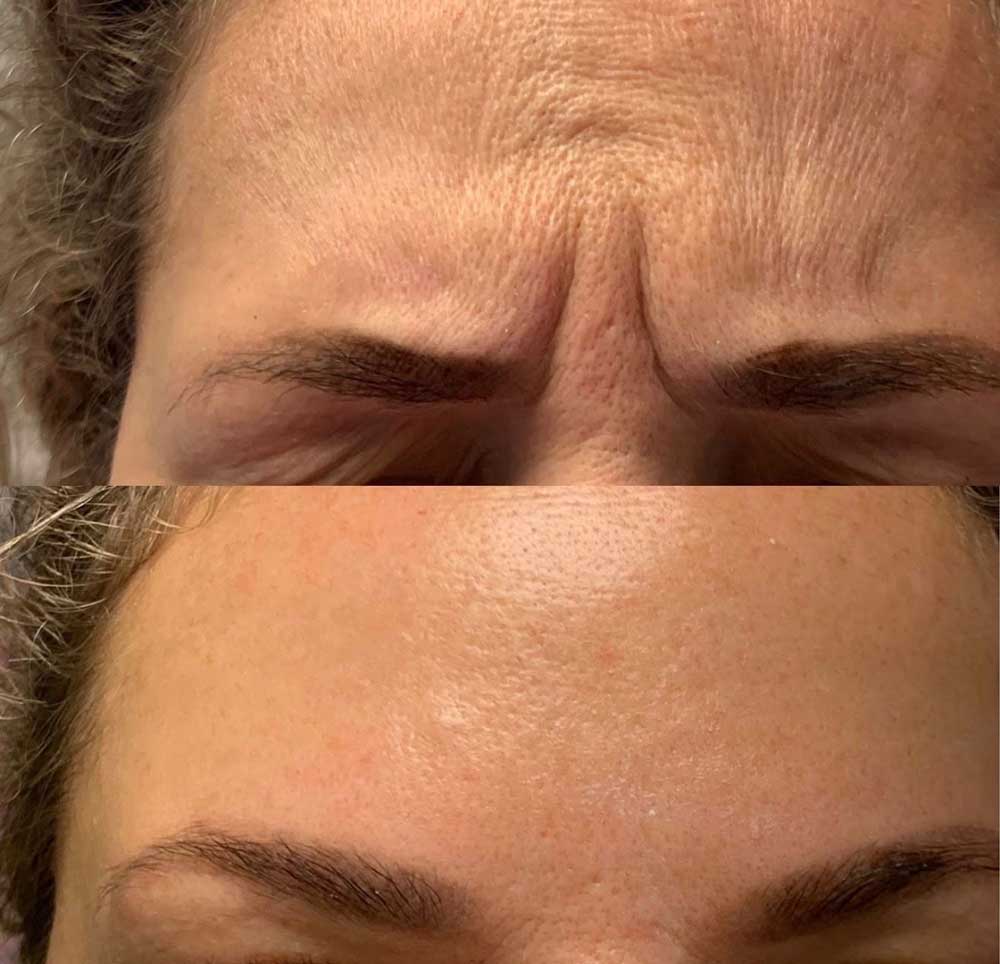
Before and After Clinical Observation
In this case, visual documentation was recorded to evaluate treatment response.
Forehead region
Glabellar region
Periorbital region
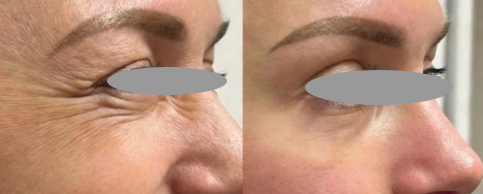
These images represent typical outcomes observed in routine clinical settings. Individual results may vary depending on anatomical and physiological factors.
Clinical Significance:
Toxara 100 units demonstrates consistent performance in managing upper facial dynamic wrinkles under routine clinical conditions. Observed outcomes suggest predictable onset, stable diffusion characteristics, and natural-looking muscle relaxation when applied appropriately. These characteristics make it suitable for use in aesthetic practices focusing on facial expression refinement.
Duration of Effect
Based on clinical observation, the effects of Toxara 100 units typically last approximately 3 to 4 months in most patients, although duration may vary depending on individual muscle activity and metabolic rate.
Maintenance treatments are commonly scheduled based on each patient’s unique response patterns, and repeated treatments over time may contribute to more stable and prolonged results.
Practitioner Observations
From a clinical handling perspective, Toxara 100 units demonstrated:
- Stable reconstitution behavior during preparation
- Consistent handling characteristics during injection
- Predictable diffusion within targeted muscle layers
- Suitable performance for routine aesthetic applications
In practice, these characteristics support its use in standardized facial wrinkle treatment protocols.
Safety and Individual Variation
As with all botulinum toxin treatments, outcomes are influenced by multiple factors, including:
- Individual muscle strength and facial anatomy
- Injection technique and dosage distribution
- Patient metabolic differences
- Treatment area complexity
Mild temporary effects such as redness, swelling, or minor bruising may occur at injection sites and typically resolve without intervention.
Limitations of Treatment
It is important to note that botulinum toxin is primarily effective for dynamic wrinkles and does not address:
- Static wrinkles caused by skin laxity
- Volume loss in facial tissues
- Skin texture irregularities unrelated to muscle activity
Combination treatments may be considered depending on patient needs.
Conclusion
In this clinical observation, Toxara 100 units showed visible improvement in dynamic facial wrinkles within 7–14 days after treatment, with peak effect observed around two weeks. The results highlight its applicability in routine aesthetic procedures for upper facial rejuvenation, particularly in patients seeking natural-looking reduction of expression lines.
As with all neuromodulator treatments, outcomes depend on practitioner technique and individual patient response.