Successful botulinum toxin treatments depend on more than selecting a high-quality product. Injection technique plays an equally important role in determining treatment outcomes. Whether treating wrinkles, or facial contouring, every injection requires careful evaluation of facial anatomy, muscle activity, dosing strategy, and injection depth. Small adjustments in technique can significantly improve both safety and aesthetic outcomes.
This guide reviews the fundamental principles of botulinum toxin injection technique and highlights practical considerations that help practitioners achieve consistent, natural-looking results.

Key Principles of Botulinum Toxin Injection Technique
1. Individualized Facial Assessment
Effective treatment planning begins before the injection itself. Patients should be evaluated both at rest and during dynamic facial movement, since wrinkle formation is closely related to muscle activity rather than static skin appearance alone.
Key factors to assess include:
- Muscle strength and contraction patterns
- Eyebrow position and forehead movement
- Facial symmetry and dominant muscle activity
- Skin thickness and quality
- Previous botulinum toxin treatments
- Age-related volume loss
- Individual aesthetic goals
A thorough assessment helps practitioners create an injection plan that preserves natural expression while addressing the patient’s primary concerns.
2. Precise Injection Placement
Correct placement is often more important than simply increasing the number of injection points. Each injection should be delivered into the functional portion of the target muscle, with placement adjusted according to the patient’s unique movement pattern.
For example:
- Forehead (Frontalis): Placement that is too low may increase the risk of brow heaviness, while placement that is too high may leave residual forehead lines.
- Glabellar Complex: Accurate targeting of the corrugator and procerus muscles helps soften frown lines while maintaining a natural appearance.
- Crow’s Feet: Injection points should follow the lateral orbicularis oculi while avoiding excessive medial placement that may increase unwanted diffusion.
- Masseter: For facial slimming, injections are typically concentrated within the lower portion of the muscle to reduce the chance of affecting neighboring muscles.
For a more detailed anatomical breakdown of injection sites by facial region, refer to our clinical guide on botulinum toxin type A injection sites.
3. Injection Depth
There is no single injection depth that works for every facial muscle. Superficial muscles may require relatively shallow placement, whereas larger muscles such as the masseter generally require deeper intramuscular injection.
Incorrect depth may contribute to:
- Reduced treatment effectiveness
- Increased diffusion
- Uneven muscle relaxation
- Greater risk of complications
Experienced injectors adjust depth according to anatomical landmarks and the characteristics of the target muscle rather than relying on a universal approach.
4. Dilution and Dose
Injection technique is closely connected to product preparation. While practitioners often focus on the number of units administered, dilution also influences injection volume, handling, precision, and diffusion characteristics.
When planning treatment, practitioners should consider:
- Muscle strength
- Treatment indication
- Patient gender
- Previous toxin response
- Desired degree of muscle relaxation
Using unnecessarily high doses rarely improves aesthetic outcomes and may increase the likelihood of unwanted muscle weakness.
5. Managing Diffusion
Diffusion is a normal characteristic of botulinum toxin treatment and is not inherently negative. A controlled degree of diffusion can help distribute the effect across the target muscle. The goal is not to eliminate diffusion, but to keep it within the intended treatment area. For a more detailed explanation of what causes diffusion and how to manage it, see our guide on botulinum toxin diffusion.
Slow, controlled injections with precise placement generally improve treatment predictability and reduce the likelihood of affecting adjacent muscles.
Clinical Tips for Improving Injection Outcomes
1. Observe Muscle Movement Before Marking Injection Points
Ask patients to perform natural facial expressions such as frowning, smiling, or raising the eyebrows before marking injection sites. Dynamic assessment often provides more useful information than relying solely on anatomical landmarks.
2. Start Conservatively When Appropriate
For first-time patients or those with weaker facial muscles, a conservative dosing strategy allows practitioners to evaluate individual response while reducing the likelihood of overcorrection.
3. Maintain Injection Symmetry Without Chasing Perfect Symmetry
Facial asymmetry is common. Rather than applying identical doses on both sides, practitioners should adjust injection patterns according to muscle activity while aiming for balanced, natural results.
4. Communicate Realistic Expectations
Explain that botulinum toxin typically requires several days before noticeable improvement appears and that maximum effect develops gradually. Appropriate patient education helps improve treatment satisfaction.
5. Schedule Follow-Up Evaluation
A follow-up visit approximately two weeks after treatment allows practitioners to assess treatment response and determine whether minor touch-ups are necessary.
Choosing a Reliable Botulinum Toxin Product
Technique alone cannot compensate for inconsistent product quality. Practitioners should use botulinum toxin formulations supplied by reliable manufacturers that provide consistent potency, quality control, and clear handling recommendations.
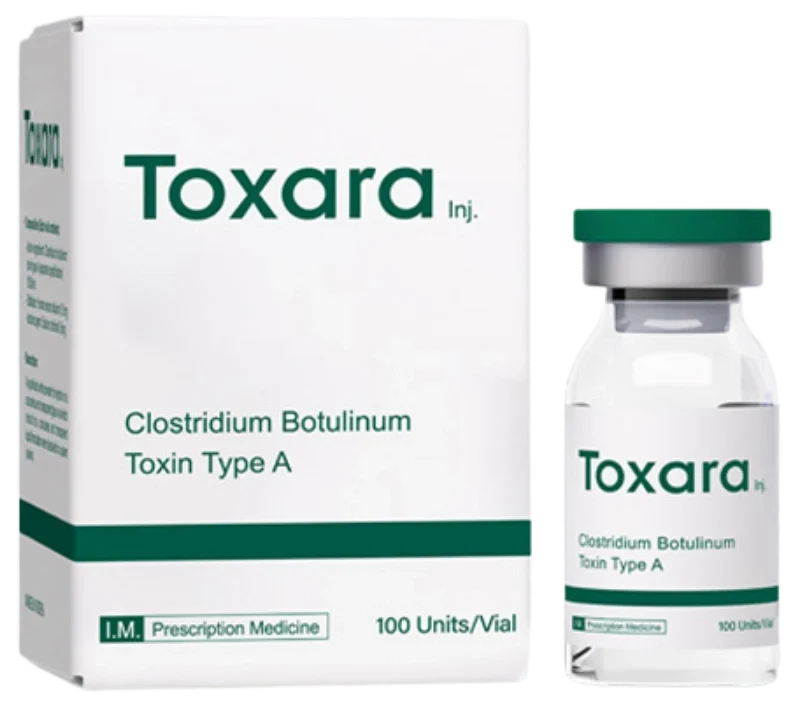
Products such as Toxara Botulinum Toxin Type A are developed for professional aesthetic practice, offering consistent manufacturing standards and predictable clinical performance. When combined with appropriate injection planning and individualized dosing, experienced practitioners can achieve reliable and natural-looking facial rejuvenation outcomes.
FAQ
Q1: Does injection technique affect botulinum toxin results?
Yes. Injection technique influences accuracy, diffusion, and overall treatment outcomes.
Q2: What is the correct injection depth for botulinum toxin?
There is no universal injection depth. It depends on the target muscle and treatment area.
Q3: Does product dilution affect injection technique?
Yes. Dilution influences injection volume, precision, and diffusion characteristics.
Q4: Can botulinum toxin injection technique reduce complications?
Yes. Careful technique helps reduce the risk of brow ptosis, eyelid ptosis, and facial asymmetry.
Q5: How can practitioners improve injection accuracy?
By performing facial assessment, evaluating muscle movement, identifying anatomical landmarks, and maintaining consistent technique.
Conclusion
Successful botulinum toxin treatment requires far more than selecting the correct number of units. Careful facial assessment, accurate injection placement, appropriate dilution, individualized dosing, and an understanding of facial anatomy all contribute to safe and predictable outcomes.
As aesthetic techniques continue to evolve, practitioners who combine sound clinical knowledge with refined injection skills are better positioned to achieve natural-looking results while minimizing complications. Choosing a reliable botulinum toxin formulation and applying evidence-based injection techniques remain the foundation of successful facial aesthetic treatments.