Controlled diffusion is a natural part of every botulinum toxin treatment. After injection, a small amount of the neurotoxin spreads from the injection site into surrounding tissues before binding to the target nerve endings. While limited diffusion is necessary for effective treatment, excessive or unintended diffusion may affect adjacent muscles, leading to temporary complications such as eyelid ptosis, eyebrow asymmetry, or an unnatural facial expression.
This article explains why botulinum toxin diffusion occurs and practical strategies practitioners can use to minimize unwanted toxin spread.
What Is Botulinum Toxin Diffusion
Botulinum toxin diffusion refers to the movement of the injected neurotoxin from the injection site into nearby tissues after administration. This process occurs naturally as the solution disperses before binding to cholinergic nerve terminals.
It is important to distinguish diffusion from spread, although the terms are often used interchangeably.
- Diffusion is the passive movement of toxin molecules through surrounding tissues.
- Spread generally refers to the physical displacement of the injected solution, which can occur because of injection pressure, injection volume, massage, or muscle movement immediately after treatment.
Clinical takeaway:
A controlled degree of diffusion is beneficial. Issues arise only when the effect extends beyond the target muscle and temporarily weakens adjacent muscles—something usually linked to excessive spread caused by injection factors.
What Causes Botulinum Toxin Diffusion
Diffusion is driven by a combination of injection-related factors and patient-related factors. Understanding these causes allows practitioners to manage these variables and minimize unwanted spread.
1. Injection Volume
Larger injection volumes introduce more liquid into the tissue, creating greater hydrostatic pressure and carrying the toxin farther from the injection site.
2. Dilution Ratio
Higher dilution increases the total fluid volume required to deliver the same dose, which naturally disperses over a larger area upon injection.
3. Injection Technique
The physical act of injection itself causes displacement. Faster injection speeds generate more tissue disruption. Superficial placement places the toxin in looser tissue planes where it can travel more easily, while inaccurate needle positioning may deposit the solution closer to unintended muscles.
4. Total Dose
Larger doses create a higher concentration gradient between the injection site and surrounding tissues, which drives passive molecular movement outward over a greater distance.
5. Patient Anatomy
Muscle size, thickness, and the proximity of adjacent muscles determine how much tissue barrier exists to contain the solution. Closely spaced muscles (e.g., around the eyes) offer less anatomical separation, allowing the toxin to reach neighboring muscles more readily. Subcutaneous fat thickness and tissue density also influence how easily the solution disperses.
6. Post-Treatment Activities
Physical forces applied after injection—such as rubbing, massage, muscle contraction from exercise, or gravitational pressure from lying prone—can mechanically push the unbound solution through tissue planes before it has fully bound to nerve terminals.
How to Prevent Botulinum Toxin Diffusion
Diffusion cannot be completely eliminated, but it can be effectively controlled through:
- Thorough anatomical knowledge – Precisely locate target muscles and adjacent structures to avoid unintended effects.
- Appropriate dilution and small injection volumes – Enhances precision, especially in delicate facial areas.
- Lowest effective dose – Achieves desired outcomes while minimizing exposure to surrounding tissues.
- Accurate injection point selection – Even minor deviations can significantly affect results in complex anatomical regions.
- Clear post-treatment instructions – Advise patients to avoid massage, pressure, or excessive muscle movement that may promote physical spread.
While skilled injection practice remains the most critical element, a product with controlled, low-diffusion properties can further enhance treatment precision.
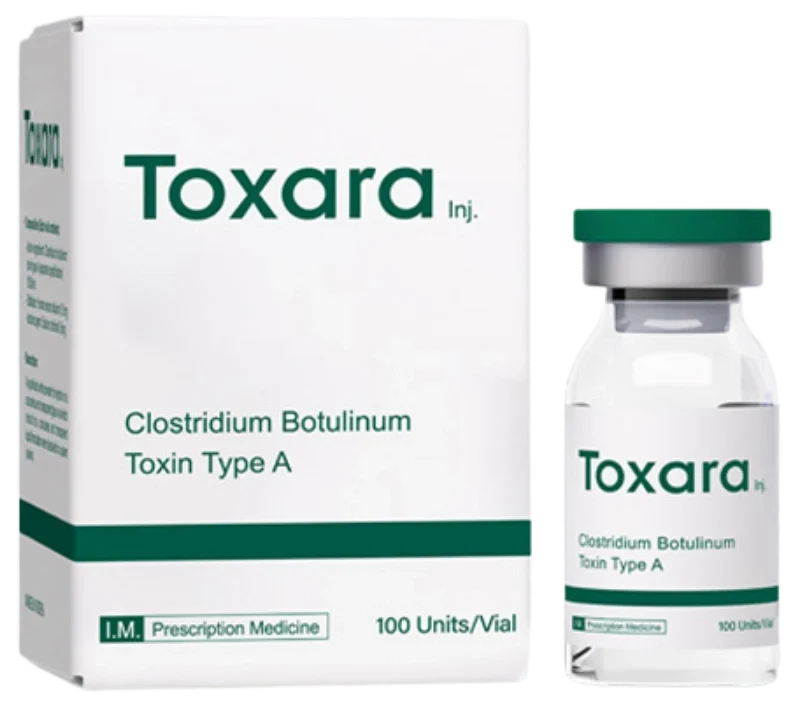
Toxara Botulinum Toxin Type A is designed with this in mind—offering consistent potency, reliable reconstitution, and favorable diffusion characteristics that help limit spread beyond the target muscle. This supports practitioners in achieving targeted, natural-looking outcomes across a wide range of facial indications, which is why an increasing number of professional clinics are choosing it for their daily practice.

Conclusion
Botulinum toxin diffusion is a normal part of every aesthetic treatment, but controlling it is essential for achieving predictable and natural-looking outcomes.
Rather than depending on a single variable, successful treatments require careful attention to facial anatomy, injection technique, dosage, dilution, and patient selection. Practitioners can significantly reduce unwanted toxin spread by following established injection principles and using products designed for controlled diffusion.
FAQ
Does every botulinum toxin diffuse after injection?
Yes. A certain degree of diffusion is expected and necessary for the toxin to reach the target muscle fibers. Excessive diffusion, however, may increase the risk of temporary side effects.
Is more diffusion always a bad thing?
No. Controlled diffusion contributes to even muscle relaxation. Problems occur only when the toxin reaches unintended muscles.
Can diffusion be completely prevented?
No. Diffusion is a natural biological process, but careful injection technique and appropriate dosing can significantly reduce unwanted toxin spread.
How long do diffusion-related side effects last?
Most unwanted effects are temporary and gradually improve as the botulinum toxin wears off, typically within several weeks.
Is injector experience important?
Absolutely. Knowledge of facial anatomy, proper dosing, and accurate injection technique are among the most important factors in minimizing unwanted diffusion.