How many units of botulinum toxin for forehead lines are typically needed? While 20 units is often referenced as the standard dose for horizontal forehead lines, many patients achieve natural-looking results with lower amounts. Most treatments fall between 10 and 20 units, although the exact amount depends on factors such as muscle strength, forehead size, wrinkle severity, and the desired aesthetic outcome.
In this guide, we’ll break down typical forehead dosing ranges, the factors that influence unit requirements, and what patients can realistically expect from treatment.

Where Does “20 Units” Come From?
In regulatory labeling for botulinum toxin type A, the recommended dose for forehead lines is 20 units total — divided across 5 injection points at 4 units each.
But here’s the catch: that 20‑unit label dose is actually meant to be used together with glabellar treatment (the “11” lines between your brows). The combined recommendation is:
-
Forehead: 20 units
-
Glabella: 20 units
-
Total: 40 units
Why together? Because treating the forehead alone — without relaxing the brow depressors — can cause your brows to drop. The frontalis muscle lifts your brows; the glabellar muscles pull them down. If you relax only the lifter, the pullers take over.
That said, many patients in practice get great results with less than 20 units on the forehead — sometimes as little as 8–10 units. Dosing is not a fixed formula; it’s personalized to your muscle strength, forehead shape, and desired outcome.
6 Key Factors That Determine Your Dose
No two foreheads are identical. A qualified injector will personalize treatment based on several important factors.
1. Muscle Strength and Thickness
- Strong, bulky frontalis muscles often require 14–20 units or more.
- Weaker or thinner muscles may respond well to 6–12 units.
2. Forehead Height
- Short foreheads have a higher risk of brow ptosis and often require more conservative placement.
- Tall foreheads can typically tolerate standard placement patterns.
3. Gender
- Women commonly start between 10 and 16 units.
- Men often require 14–20 units or more because of increased muscle mass.
4. Wrinkle Depth at Rest
- Fine dynamic lines generally respond to lower doses.
- Deep static lines may require higher doses or complementary aesthetic treatments.
5. Desired Aesthetic Outcome
- Subtle softening with full movement: 6–12 units
- Natural smoothing with retained expression: 10–16 units
- More complete relaxation: 14–20+ units
6. Previous Treatment History
- First-time patients are often treated conservatively and reassessed after two weeks.
- Returning patients may have their dose adjusted according to previous results.
Forehead Units Compared with Other Common Treatment Areas
Many patients considering forehead treatment also want to understand how dosing compares with other facial areas. While exact dosing varies according to anatomy and treatment goals, the following ranges are commonly referenced in aesthetic practice.
| Treatment Area | Typical Unit Range* |
|---|---|
| Forehead Lines (Frontalis) | 10–20 Units |
| Glabellar Lines (Frown Lines) | 20 Units |
| Crow’s Feet | 12–24 Units |
| Bunny Lines | 4–10 Units |
| Chin Dimpling | 4–8 Units |
| Masseter Area | 20–50 Units per Side |
Unit requirements vary according to muscle strength, facial anatomy, treatment objectives, and the specific botulinum toxin product used.
Why Unit Requirements May Vary Between Botulinum Toxin Products
When discussing forehead dosing, it is important to understand that botulinum toxin units are product-specific.
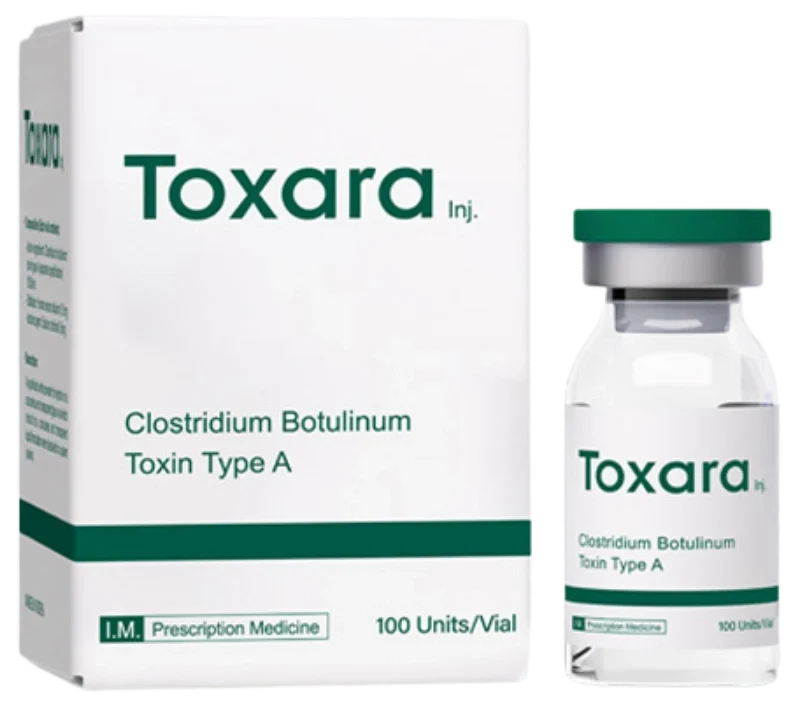
Different manufacturers use different production methods, purification processes, biological activity testing standards, and formulation technologies. For example, different botulinum toxin formulations may vary in purity, diffusion behavior, and clinical performance, which can influence how practitioners evaluate dosing in practice. Products such as Toxara Botulinum Toxin Type A are designed with consistent quality standards to support predictable clinical use.

Because of these differences, unit measurements from one product should not automatically be considered equivalent to another. For this reason, experienced practitioners rely on clinical assessment and product-specific guidance rather than a universal conversion formula.
Practical Dosing Ranges by Treatment Approach
| Treatment Strategy | Forehead Units | Typical Candidate |
|---|---|---|
| Ultra-Conservative | 6–10 Units | First-time patients or those seeking minimal change |
| Moderate (Most Common) | 10–16 Units | Patients seeking natural smoothing |
| Standard Reference | 20 Units | Patients following label-referenced dosing |
| Higher-Dose Approach | 14–20+ Units | Strong muscles or deeper forehead lines |
The Golden Safety Rule: The 2-cm Boundary
To reduce the risk of eyelid drooping (ptosis), injections are generally placed at least 1.5–2 cm above the bony brow ridge.
This placement helps prevent unintended diffusion into muscles responsible for lifting the eyelid.
Many experienced practitioners also use a higher placement pattern that preserves some natural brow movement while reducing forehead lines.
Why Treating the Forehead Alone Can Be Risky
Treating only the forehead may create an imbalance between muscles that elevate the brows and those that pull them downward.
The frontalis muscle lifts the brows, while the glabellar complex contributes to brow depression.
If only the forehead is treated, the depressor muscles may become relatively stronger, potentially creating a heavier or lower brow appearance.
For this reason, many practitioners assess both areas together when developing a treatment plan.
How Much Does Forehead Botulinum Toxin Treatment Cost?
Treatment costs vary significantly depending on:
- Geographic location
- Provider expertise
- Clinic setting
- Number of units used
- Product selection
Rather than focusing on a fixed price per unit, patients should prioritize provider qualifications, treatment quality, and individualized dosing strategies.
What to Expect After Treatment
| Timeline | What Happens |
|---|---|
| Day 1–3 | Usually no visible change |
| Day 4–7 | Early smoothing begins |
| Day 10–14 | Full results become visible |
| Around Day 14 | Follow-up assessment may occur |
| Month 3–4 | Effects gradually begin to decrease |
| Month 4–6 | Repeat treatment is often considered |
FAQ
Is 20 units of botulinum toxin too much for the forehead?
Not necessarily. Twenty units is the commonly referenced dose for horizontal forehead lines. However, many patients achieve satisfactory results with lower doses depending on their anatomy and treatment goals.
Can 10 units treat forehead wrinkles?
Yes. Patients with mild dynamic lines or weaker frontalis muscles may see noticeable improvement with approximately 10 units while maintaining natural facial expression.
How long do forehead botulinum toxin results last?
Results typically last around 3 to 6 months, although duration varies according to metabolism, muscle activity, dosage, and individual response.
How many units are typically used for men?
Men often require higher doses because of greater muscle mass and stronger muscle activity. Many treatment plans fall between 14 and 20 units or higher depending on individual assessment.
Can forehead treatment cause eyebrow drooping?
Improper placement or excessive dosing may increase the risk of brow heaviness or eyebrow drooping. Treatment should always be performed by qualified medical professionals familiar with facial anatomy.
Conclusion
So, how many units of botulinum toxin for forehead lines are typically used?
While the commonly referenced dose is 20 units, many patients receive between 10 and 16 units in everyday clinical practice.
The most effective treatment plan is never based on a fixed number alone. Successful outcomes depend on facial anatomy, muscle activity, treatment goals, and professional clinical judgment.A personalized assessment by a qualified injector remains the safest and most reliable way to determine the appropriate number of units for forehead treatment.
Disclaimer: This article is intended for educational purposes only and does not constitute medical advice. Always consult a licensed healthcare professional for individualized recommendations regarding botulinum toxin treatments.