Masseter muscle prominence (MMP) is a common aesthetic concern, particularly among East Asian populations seeking a softer lower face contour. Botulinum toxin for jawline slimming has emerged as the preferred non-surgical solution, offering controlled refinement without the risks of surgical resection.
Unlike upper-face wrinkle treatments, masseter reduction requires deeper injections, higher dosing, and an understanding of masticatory function. This guide covers anatomical considerations, injection techniques, and expected outcomes for aesthetic practitioners.
What Causes a Wide Jawline?
A wide jawline may result from muscular, bony, or soft tissue factors—distinguishing between them is essential for treatment planning.
- Masseter hypertrophy: The most common treatable cause, driven by clenching, bruxism, unilateral chewing, or genetics.
- Bone-dominant width: Botulinum toxin does not affect bone; these patients see limited slimming.
- Soft tissue factors: Laxity or volume loss may worsen jawline definition post-treatment.
Assessment: Palpate masseter during clenching, evaluate at rest and with contraction, and determine if width is muscular or bony.
How Botulinum Toxin Works on the Jawline?
Botulinum toxin type A induces temporary muscle atrophy through chemical denervation. When injected into the masseter muscle, it blocks acetylcholine release at the neuromuscular junction, preventing muscle contraction. With reduced activity, the muscle gradually loses bulk over weeks to months, resulting in a softened lower face contour.

Clinical studies demonstrate significant and sustained lower facial width reduction following treatment. Visible slimming typically begins within 2 to 6 weeks, with maximal effect at approximately 11 weeks. Results generally last 4 to 6 months.
Concerns about impaired chewing function are largely unfounded in healthy individuals; studies report no significant changes in perceived masticatory function following masseter injection.
Clinical Injection Points for Masseter Reduction
Recommended Injection Landmarks
A commonly used approach for masseter reduction involves targeting the thickest portion of the masseter muscle, typically using a multi-point injection pattern.
- Traditional 3-point technique: A triangular pattern within the central bulk of the muscle is often used in clinical practice. Total dosage is usually distributed evenly across each point, depending on muscle strength and patient anatomy.
- Clinical nerve-guided approach: More advanced techniques focus on identifying the central intramuscular nerve-dense region (CINDR) to achieve more consistent outcomes and reduce diffusion-related side effects.
- Extended injection mapping: Some practitioners also define a broader “safe treatment zone” within the lower face to ensure balanced diffusion and avoid adjacent facial structures.
Technique Considerations
1. Injection depth:
Deep intramuscular injection is generally preferred to ensure accurate placement within the masseter and reduce superficial diffusion effects.
2. Treatment points:
Depending on muscle size, clinicians may use multiple injection points per side to achieve even muscle relaxation.
For a more detailed anatomical mapping of injection points in facial contouring treatments, see our clinical guide on botulinum toxin injection sites.
3. Dose adjustment:
Dosage is typically individualized based on muscle hypertrophy, facial symmetry, and desired slimming effect.
Dosage and reconstitution protocols may vary depending on treatment area and muscle activity. For a more detailed overview, refer to our guide on botulinum toxin dosage and dilution in clinical practice.
Safety Considerations
- Facial expression balance: Careful placement helps minimize the risk of unwanted diffusion to adjacent muscles that may affect smile symmetry.
- Lower face support: In patients with mild tissue laxity, practitioners may combine treatment strategies to maintain natural lower face contour.
- Functional preservation: Conservative dosing is recommended for first-time patients to reduce chewing fatigue and overcorrection risk.
Dosage & Results
Dosage for masseter reduction is typically adjusted based on muscle size and facial structure. In most clinical cases, treatment is distributed across multiple injection points on each side, with dosing tailored to achieve balanced muscle relaxation.
Visible changes usually begin within 2–4 weeks, with full jawline slimming effects developing by 4–8 weeks. Results generally last around 3–6 months, depending on individual muscle activity and treatment frequency.
Safety Considerations
When properly performed, botulinum toxin treatment for jawline slimming is considered safe and well tolerated.
Common temporary effects may include mild swelling, bruising, or chewing fatigue. Less frequently, slight asymmetry or changes in smile dynamics may occur, usually resolving over time.
Careful dosing and accurate placement are key to minimizing complications and maintaining natural facial expression.
Product Considerations in Clinical Practice
In aesthetic clinics, products with consistent diffusion profiles are often preferred for masseter treatments due to the need for controlled muscle reduction and symmetry.
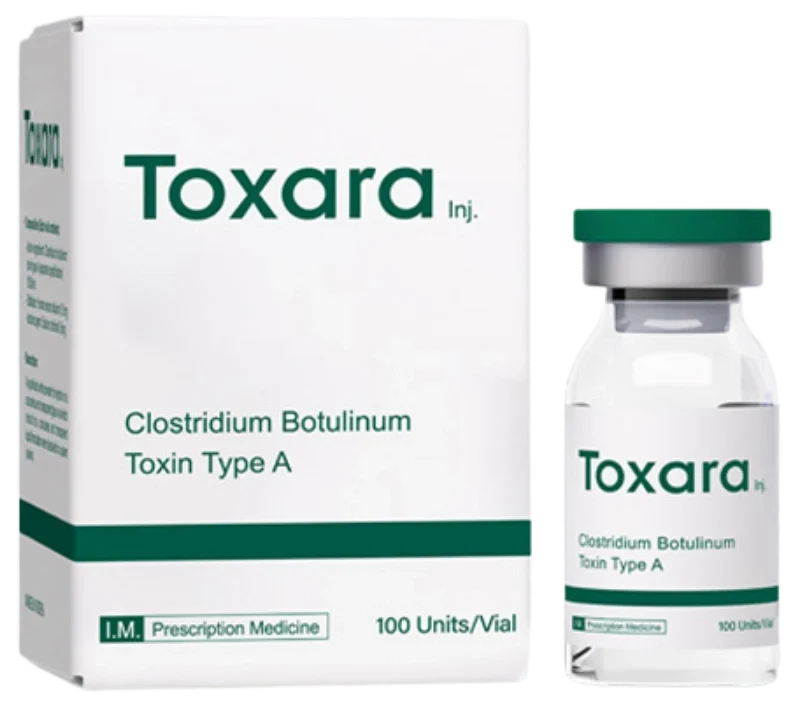
In this context, Toxara botulinum toxin type A is commonly selected by practitioners for facial contouring procedures, particularly in protocols involving masseter reduction and lower face slimming. Its predictable clinical handling allows practitioners to apply multi-point injection techniques with improved control over diffusion and treatment precision.
Conclusion
Botulinum toxin for jawline slimming is a widely used non-surgical approach for improving lower face contour by reducing masseter muscle activity. When performed with appropriate technique and dosing, it can help achieve a softer, more balanced jawline appearance with gradual and natural-looking results.